

Under U.S. immigration law, anyone who commits fraud or willfully misrepresents a material fact when seeking a visa or other immigration benefit can be found inadmissible. This means the government will not allow the person to enter the country or receive a green card, and the finding does not expire. Federal reviewers have described it as a bar that perpetually blocks admission.
For many families, the only remedy is a waiver. Form I-601 asks U.S. Citizenship and Immigration Services (USCIS) to excuse the inadmissibility so an immigrant visa or adjustment of status case can proceed. Approval is never automatic. Applicants must show that a U.S. citizen or lawful permanent resident spouse or parent would suffer extreme hardship without them, and that they merit the waiver as a matter of discretion.
Waiver cases ask a lot of families. They require honesty about the past and careful proof about the future. Sverdloff Law Group helps individuals understand how the process works.
Who We Serve
Fraud and misrepresentation findings surface in different ways. Some people learn about them during a consular interview abroad. Others find out years later in a denial notice. We often work with people facing situations like these:
- Outside the U.S. and blocked by a past finding: A consular or border officer found you inadmissible over false statements or documents in an earlier visa application or entry attempt, and that finding now stands between you and an immigrant visa.
- Accused of fraud over an honest mistake: Officers spotted conflicting details in your forms or interview answers and decided you lied on purpose, but you believe the discrepancy was a misunderstanding worth challenging before assuming a waiver is the only option.
- Facing separation from a spouse or parent: Your U.S. citizen or permanent resident spouse or parent would face serious medical or financial hardship if you could not immigrate, and you need help proving that hardship meets the legal standard.
Each situation calls for its own strategy. Our first question is always whether the finding itself is correct, and we answer it before recommending any filing.
What to Expect During the I-601 Waiver Process
No two waiver cases look exactly alike, but most move through the same general stages. Here is what the process often involves when you work with our firm:
- Reviewing the finding. We start with the records behind the decision. A misrepresentation is willful only if it was made knowingly rather than by accident, and it must involve an important, or material, fact. Willfulness does not require an intent to deceive, though. If the finding does not hold up, contesting it may be the better route.
- Confirming your qualifying relative. For a fraud waiver, only a U.S. citizen or lawful permanent resident spouse or parent qualifies. A U.S. citizen child does not count as a qualifying relative for this waiver.
- Building the hardship case. Officers look at whether your relative would face extreme hardship if they stayed in the U.S. without you and if they moved abroad with you. Strong cases often rely on medical records, tax and financial documents, country conditions reports, and psychological evaluations.
- Showing you deserve approval. Even when hardship is proven, you must still show the waiver should be granted as a matter of discretion. The officer weighs positive factors, such as family ties and a steady work history, against the original misrepresentation.
- Filing and follow-up. We file Form I-601 with USCIS. If you were removed from the U.S. in the past, Form I-212 may also be needed to request permission to reapply. For applicants abroad, the waiver works hand in hand with your consular processing case, and we respond to any request for more evidence.
When USCIS approves a waiver tied to an immigrant visa or green card application, it is valid indefinitely, but it covers only the grounds of inadmissibility listed in the application.
Why Choose Sverdloff Law Group?
A fraud waiver is one of the harder filings in immigration law because the officer starts with a negative finding already in your file. Families across Illinois and beyond turn to our firm for these reasons:
- A practice built entirely around immigration: Ms. Sverdloff focuses solely on immigration law, so waiver applications and hardship evidence are part of our everyday work.
- Personal understanding of the immigrant experience: Our founder came to the United States as an immigrant and knows what is at stake when a family’s future depends on a government decision.
- Straight answers about your options: We tell you whether to challenge the finding or apply for a waiver, and we explain our reasoning so you can make an informed choice.
- Representation wherever you are: We represent clients throughout the United States.
Our goal is to give your case the clearest, best-supported presentation the evidence allows.
Discuss Your I-601 Waiver Case
A fraud or misrepresentation finding can feel like a closed door. For some families, it is not the final word. With solid evidence and a clear legal strategy, a waiver may give you a way to rejoin your spouse or parent in the United States.
Our attorneys can review the records behind your finding and explain which path makes sense for you. Contact Sverdloff Law Group to schedule a consultation and talk through your situation with someone who understands what your family is facing.
FAQs About I-601 Fraud Waivers
Does a fraud or misrepresentation finding ever expire?
No. Unlike some other immigration bars, this one has no waiting period that ends it. The finding stays in place for life unless USCIS approves a waiver.
What if my false statement was an honest mistake?
An accidental error is not a willful misrepresentation. Officers must look at the circumstances at the time you made the statement. Correcting a false statement on your own, at the first chance you have, may also prevent a finding in some cases. An attorney can review whether your situation fits.
Can my U.S. citizen child be my qualifying relative?
Not for this waiver. The law limits qualifying relatives to a U.S. citizen or lawful permanent resident spouse or parent. Hardship to your children can still be part of your case when it affects your qualifying relative, such as a spouse who would raise the children alone.
What counts as extreme hardship?
Extreme hardship goes beyond the sadness and disruption that nearly every family feels during a separation. Officers weigh all the factors together, including health conditions, financial strain, family ties, and conditions in the country where your relative might relocate. You need to show extreme hardship to only one qualifying relative.
Is the I-601 waiver the same as the I-601A provisional waiver?
No. Form I-601A is a provisional waiver that covers only the unlawful presence bars. A fraud or misrepresentation finding must be addressed through Form I-601.
Helping You Realize Your Dreams for a New Life in the United States
Our immigration attorneys will fight to ensure that you receive the best outcome in your immigration case.










Julia Sverdloff, Esq.
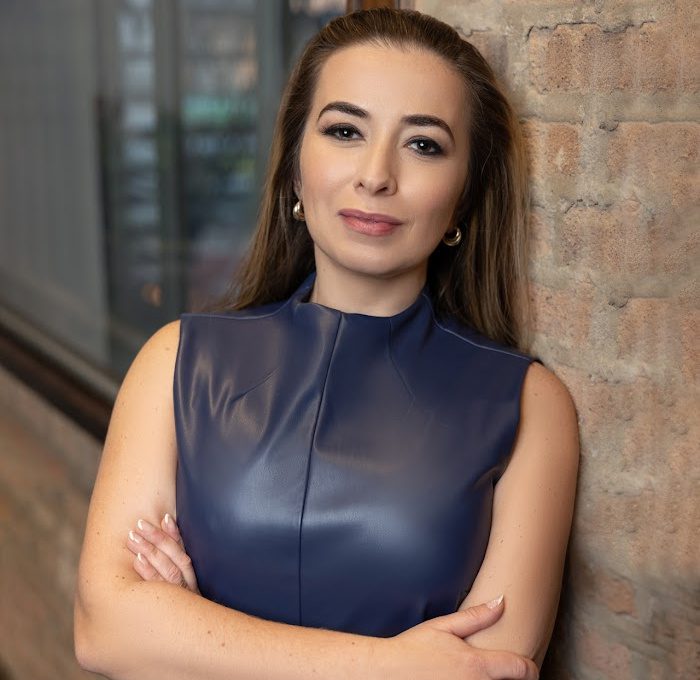
Attorney Julia Sverdloff is the founder and owner of Sverdloff Law Group in Chicago, Illinois. Our firm speaks Ukrainian, Russian, Serbian, Croatian, Bosnian and Spanish.


